
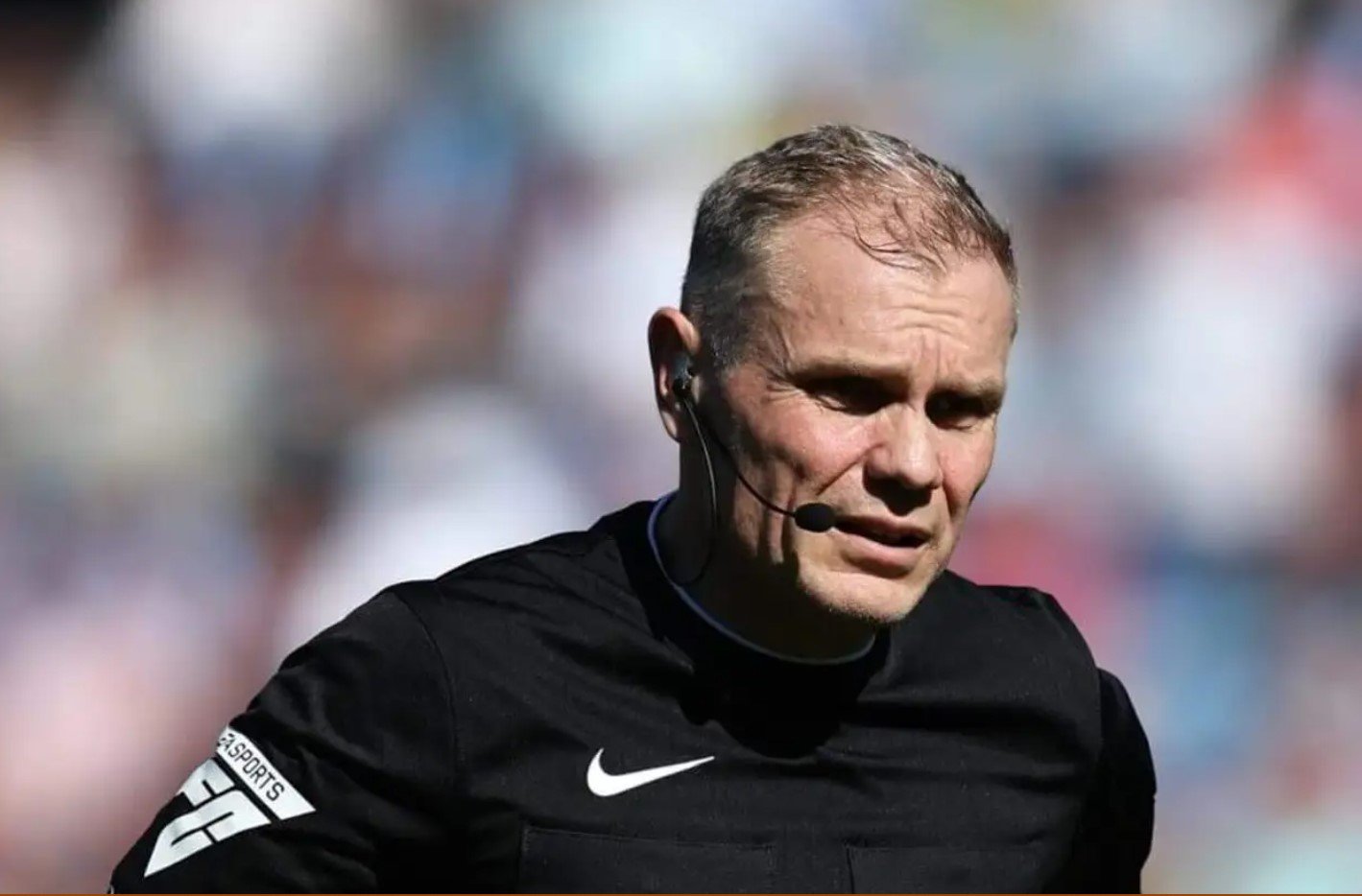
Former Premier League referee Graham Scott reveals challenges of officiating and VAR decisions
Former Premier League referee Graham Scott has offered rare insight into the unforgiving world of officiating, describing the profession as a relentless test of resilience. Retired at the end of last season, the 57-year-old has reflected on the sacrifices, scrutiny, and technical demands that defined his career.
Scott, who began refereeing in 1997 while working as a journalist, rose through the Football League before spending a decade in the Premier League. He explained how the job required not only dedication but also the ability to withstand abuse and criticism, particularly in the aftermath of contentious decisions.
The context of his comments is significant. Referees remain under intense pressure in the modern game, with VAR adding new layers of complexity. Scott insists English officials deserve greater appreciation, pointing out that only a handful of decisions across an entire season are truly inexplicable. He highlighted two recent examples: Brentford’s Nathan Collins avoiding a red card against Manchester United, and Brighton not being awarded a penalty when Malo Gusto fouled Yankuba Minteh.
The flow of his career illustrates the challenges referees face. Matches themselves were manageable, he said, but the noise from media and social platforms afterwards was harder to ignore. Long journeys home often meant replaying decisions in his head, sometimes calling fellow referees to talk through incidents until he could finally see replays.
Key incidents shaped his perspective. He recalled how criticism from peers mattered more than partisan outrage, and how referees built layers of resilience to cope with abuse. He also explained why he opposes post-match interviews for officials, arguing they would focus only on errors and damage relations further.
Scott described the goals of refereeing as clarity and consistency, but admitted VAR announcements to crowds posed new challenges. Officials must not only overturn decisions but also explain them in real time, a process that can prolong checks and frustrate supporters.
The second half of his career coincided with VAR’s introduction, which altered officiating styles. In the Championship, referees were told to act promptly, while in the Premier League they were encouraged to delay whistles to allow VAR intervention. Adjusting to that shift was not straightforward.
Late drama in matches often magnified the pressure. Scott explained how referees stuck together during the biggest calls, meeting monthly for training camps in Loughborough that combined physical drills, video analysis, and psychological support.
Closing his reflections, Scott likened refereeing to a game of “Snakes and Snakes” — one career ladder surrounded by setbacks. His words underline the human cost of a profession too often reduced to criticism. For him, the resilience required to survive at the top level is as much a part of football as the goals, saves, and victories that dominate headlines.